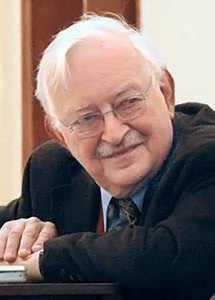
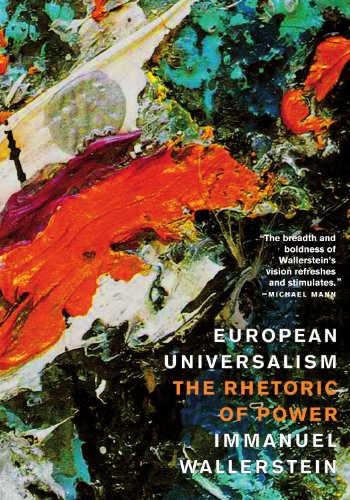
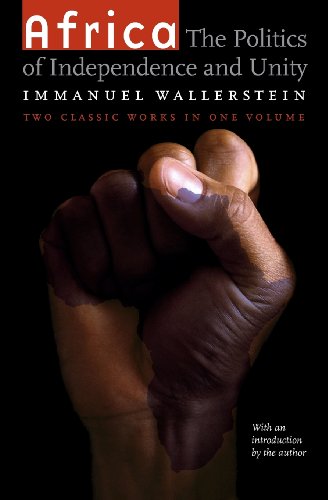

Immanuel Wallerstein

Wallerstein first became interested in world affairs as a teenager in New York City, and was particularly interested in the anti-colonial movement in India at the time. He attended Columbia University, where he received a B.A. in 1951, an M.A. in 1954 and a Ph.D. degree in 1959, and subsequently taught until 1971, when he became professor of sociology at McGill University. As of 1976, he served as distinguished professor of sociology at Binghamton University (SUNY) until his retirement in 1999, and as head of the Fernand Braudel Center for the Study of Economies, Historical Systems and Civilizations until 2005. Wallerstein held several positions as visiting professor at universities worldwide, was awarded multiple honorary degrees, intermittently served as Directeur d’études associé at the École des Hautes Études en Sciences Sociales in Paris, and was president of the International Sociological Association between 1994 and 1998. During the 1990s, he chaired the Gulbenkian Commission on the Restructuring of the Social Sciences.

Read more…

Articles

The contradictions of the Arab Spring

November 14th, 2011

The turmoil in Arab countries that is called the Arab Spring is conventionally said to have been sparked by the self-immolation of Mohamed Bouazizi in a small village of Tunisia on December 17, 2010. The massive sympathy this act aroused led, in a relatively short time, to the destitution of Tunisia’s president and then to that of Egypt’s president. In very quick order thereafter, the turmoil spread to virtually every Arab state and is still continuing.

See all articles…

Commentaries

China and the United States: Rivals, Enemies, Collaborators?

January 15th, 2012

The relations of China and the United States are a major preoccupation of the chattering classes (bloggers, the media, politicians, international bureaucrats). The analysis is usually posed as the relation between the declining superpower, the United States, and the rapidly rising “emergent” country, China. In the western world, the relation is usually defined negatively, China being seen as a “threat.” But threat to whom, and in what sense?

See all commentaries…